

Ashes of the Unbound
A post-apocalyptic factory RPG where gravity, lighting, persistence and multiplayer all have to survive a journey between worlds.
Explore the development recordI'm Jubaleth. I work in Event IT at ESL FACEIT Group, helping build and run the infrastructure behind live esports. Outside work, I spend far too much time on networks, software, AI models, PCBs and whatever else has found its way onto the bench.

Most of what I work on falls somewhere in here.
Building and operating the temporary networks, local services and connectivity needed to get a live esports event on the air.
Backend services, automation, cloud infrastructure and the glue code needed to stop repeatable jobs from remaining manual ones.
PCB design, 3D printing and custom machines. Usually several revisions and at least one completely avoidable mistake are involved.
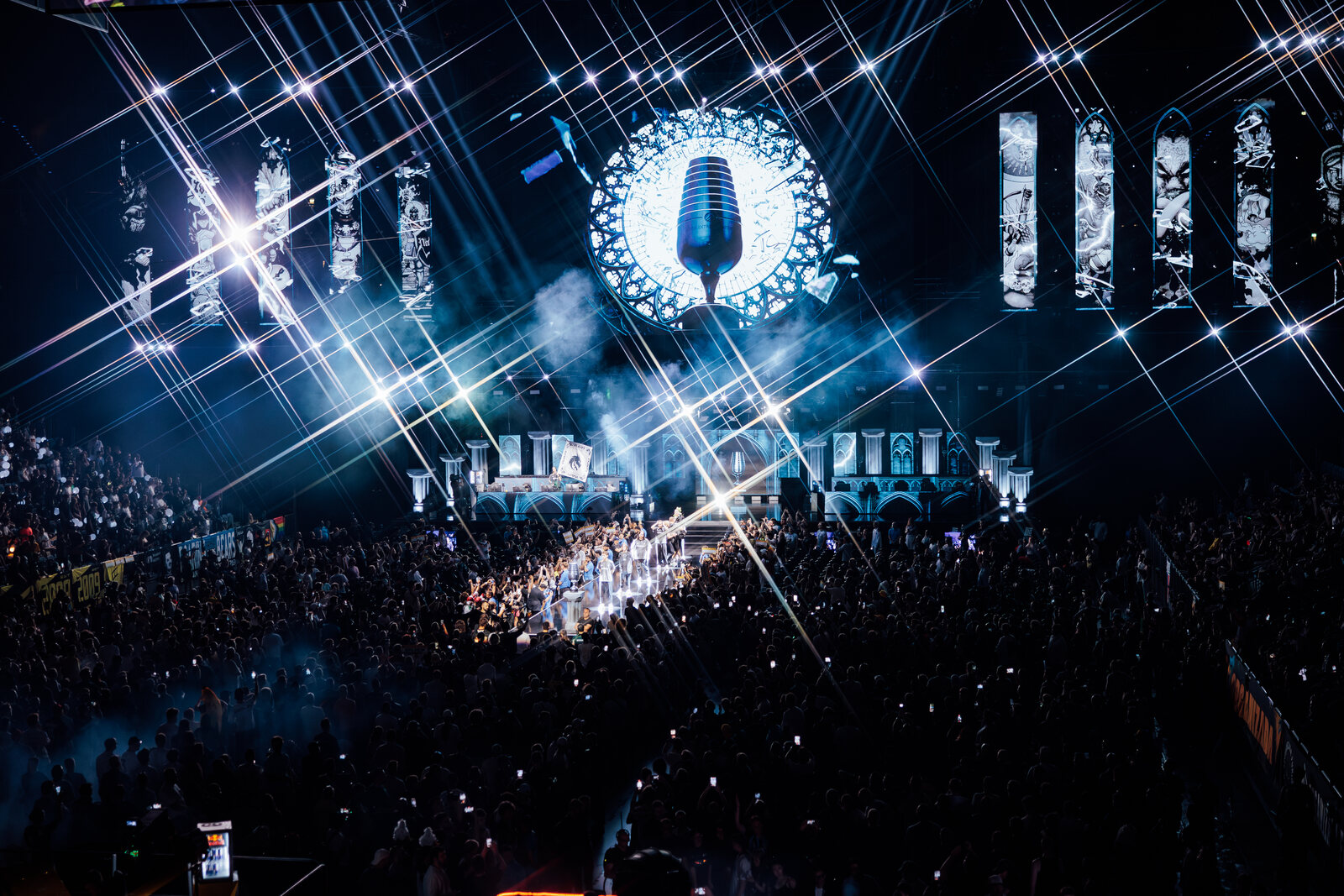
From the network up, our team keeps live esports running. On-site that means hauling in the gear, deploying it, pulling fiber and running the network through the show — effectively being the event's ISP. It stays hands-on no matter what; automation is what lets us keep pace when everything changes mid-event.
"I automate what I can — DHCP leases for every piece of gear, monitoring, cloud, whatever we need. It never fully runs itself, but it's what keeps us fast when things change."
These are the projects currently taking up most of my free time.
A post-apocalyptic factory RPG where gravity, lighting, persistence and multiplayer all have to survive a journey between worlds.
Explore the development recordThe desktop control plane I built to coordinate coding agents, review, durable work and crash recovery without becoming the message bus myself.
Follow the projectThe reusable tooling I use to turn raw conversations into generated, reviewed and trainable model data.
About SkyeEngineA secure overlay connecting model workers, storage, inference services and tools which may be spread across several providers.
Read about the Fabric testsThe current attempt to teach a 120B model to reason, code and use tools without forgetting that she is supposed to be GLaDOS.
About GLaDOSA private network with independently operated ASNs, plus its Registry, BGP tooling, DNSSEC, certificates, RPKI and rather more reconciliation code than I expected when I started it.
About HubN
The reusable machinery beneath my GLaDOS work: backend-neutral inference, provenance-aware data pipelines, structured judging and repair, training, evaluation—and Fabric for connecting the systems that run it.
Nearly sixty percent of complete three-way judgments split, but the more important result is how strongly the direction and vocabulary of disagreement …
A moderation category fired on GLaDOS’s figurative register rather than on anything in the conversation, and most of a human review queue turned …
The resource report looked excellent because most of the processes had stopped running.
BGP, VPNs and many hours spent finding out where the packet actually went.
Debian, Linux, service management, cloud infrastructure and monitoring that explains what changed.
Ansible and friends, from DHCP leases to complete deployment pipelines.
Python & C++ for years; Rust more recently.
Model training, data generation, tool use and a lot of evaluation.
Circuit and PCB design, 3D printing, machine builds and the measuring tools that settle arguments.