Ashes of the Unbound
A post-apocalyptic survival factory RPG where rebuilding civilization means making industry work across an entire planetary system.
A factory game across a planetary system
Ashes of the Unbound is set after the collapse of the Binding, a system built to suppress humanity’s magical evolution. The world did not end cleanly. It fractured, magic became unreliable, and the infrastructure people depended on went with it.
The long arc spans three acts, nine chapters and three endings. The part I am building first is deliberately physical: survive, recover machinery, establish production, and turn hostile terrain into infrastructure that can be trusted.
Why the game is about rebuilding industry
Magic in this world is powerful, but damaged and unpredictable. A pipe, conveyor or power network is comparatively boring—and that is exactly why it matters. Industry replaces unreliable magic with systems whose behaviour can be measured, repaired and expanded. Each production line is both mechanical progression and a piece of civilization returning.
That changes what ordinary survival systems mean. Scars are more than a cosmetic record of damage: they accumulate through play, affect how the world reads the character and can become a currency for magic. Survival, appearance, social consequence and ability use all touch the same history rather than living in four unrelated menus.
Gravity and coordinate frames
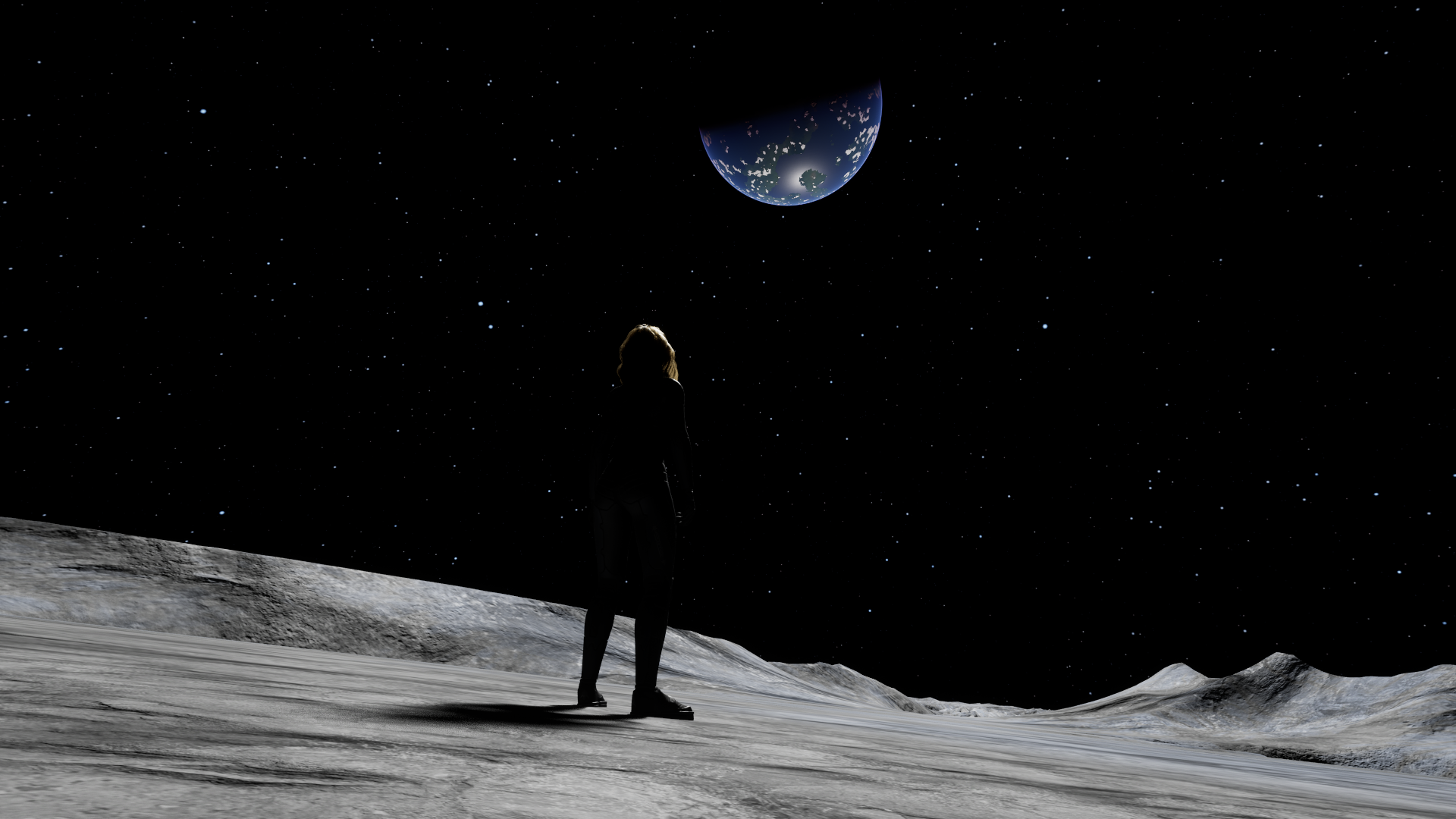
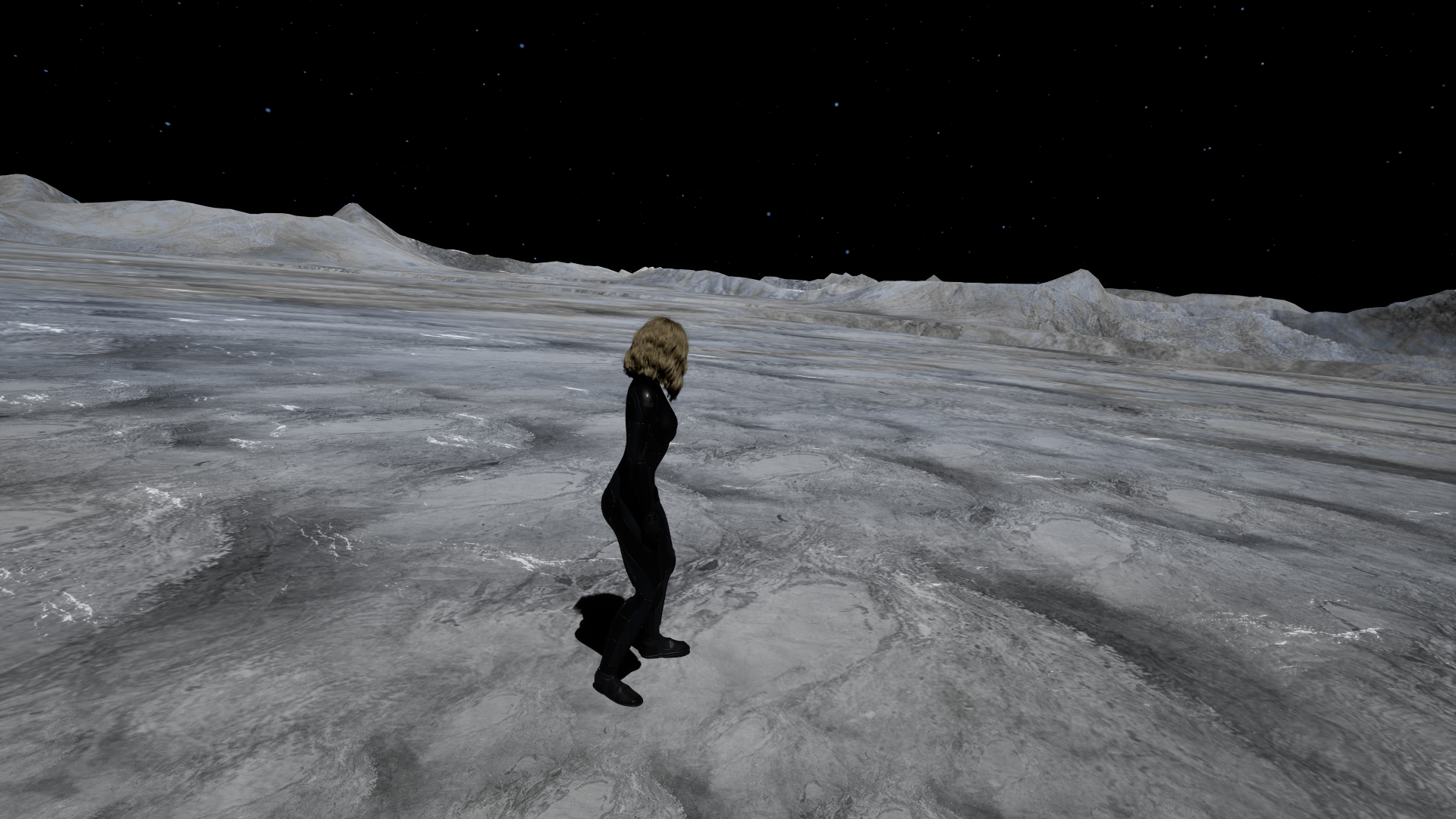
On a flat level, gravity points down, a character’s up vector is constant and one origin can pretend to be universal. On a moon, down points toward the local body. In orbit, it changes continuously. At planetary distances, one floating-point frame cannot preserve the precision needed by a character standing on the ground.
The spaceflight work introduced gravity-relative movement and cameras, per-client floating origins, body-fixed sectors and a hierarchy of transforms. A player remains local near their feet while the server retains durable placement across the system. Animation, hair, cameras, replication and restored saves all have to agree about which frame owns a vector; one forgotten world-space velocity can send a restored player the wrong way on another moon.
Gameplay systems and dedicated servers
By mid-April 2026, stats, vitals, combat, dialogue, quests, NPCs, factories, progression and saves had become separate gameplay plugins. GameContentTools had grown into fourteen editor domains for authoring and validating the assets those systems consume.
A save is an ordered set of versioned chunks. The server owns persistence in multiplayer. Identity is distinct from the session currently carrying it, and editor tooling validates content without teaching runtime code about the editor. Dedicated servers gained authoritative saves, EOS-backed identity and sessions, encrypted connections, per-player appearance and a separate administration application.
Measured celestial lighting
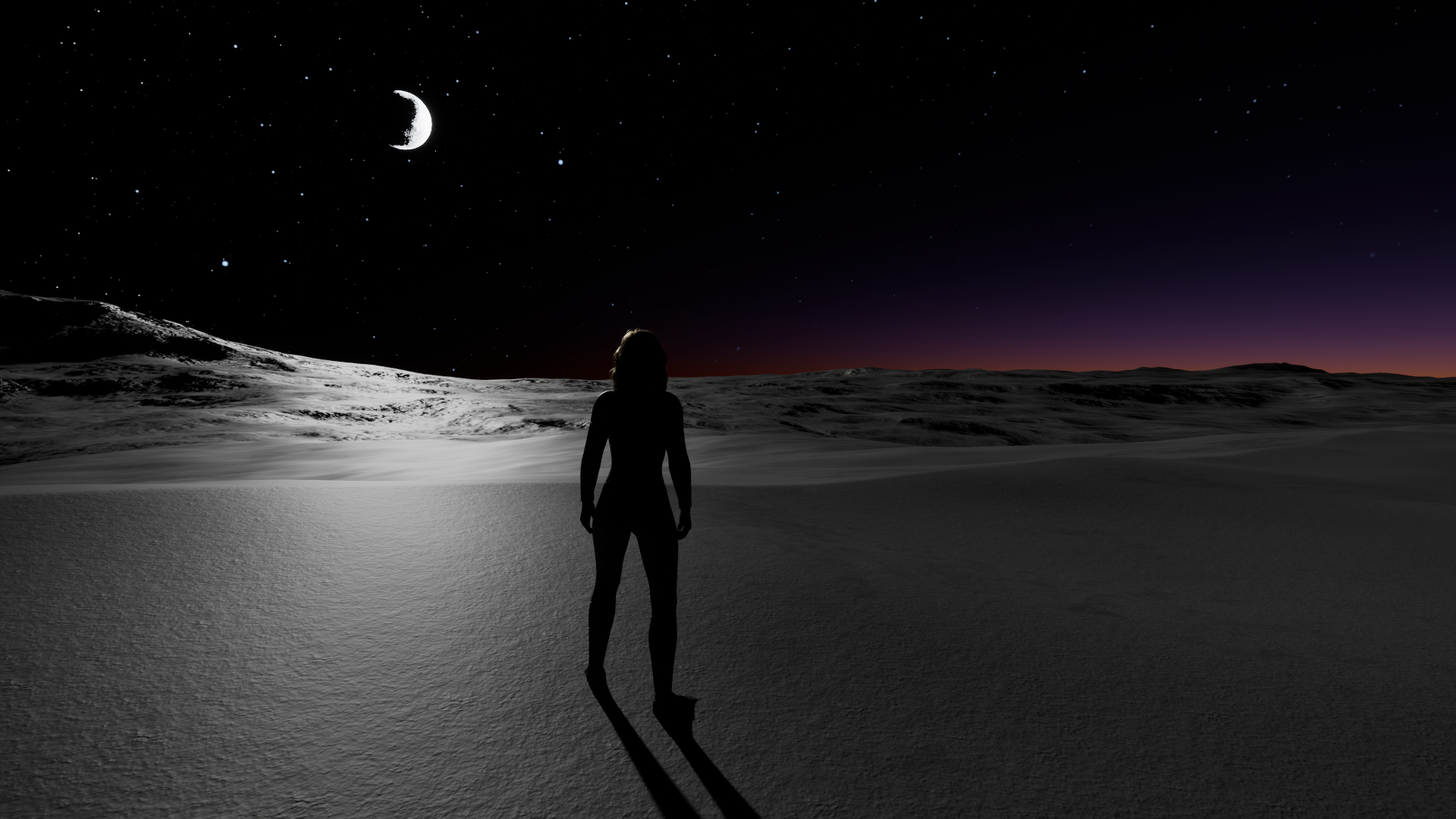
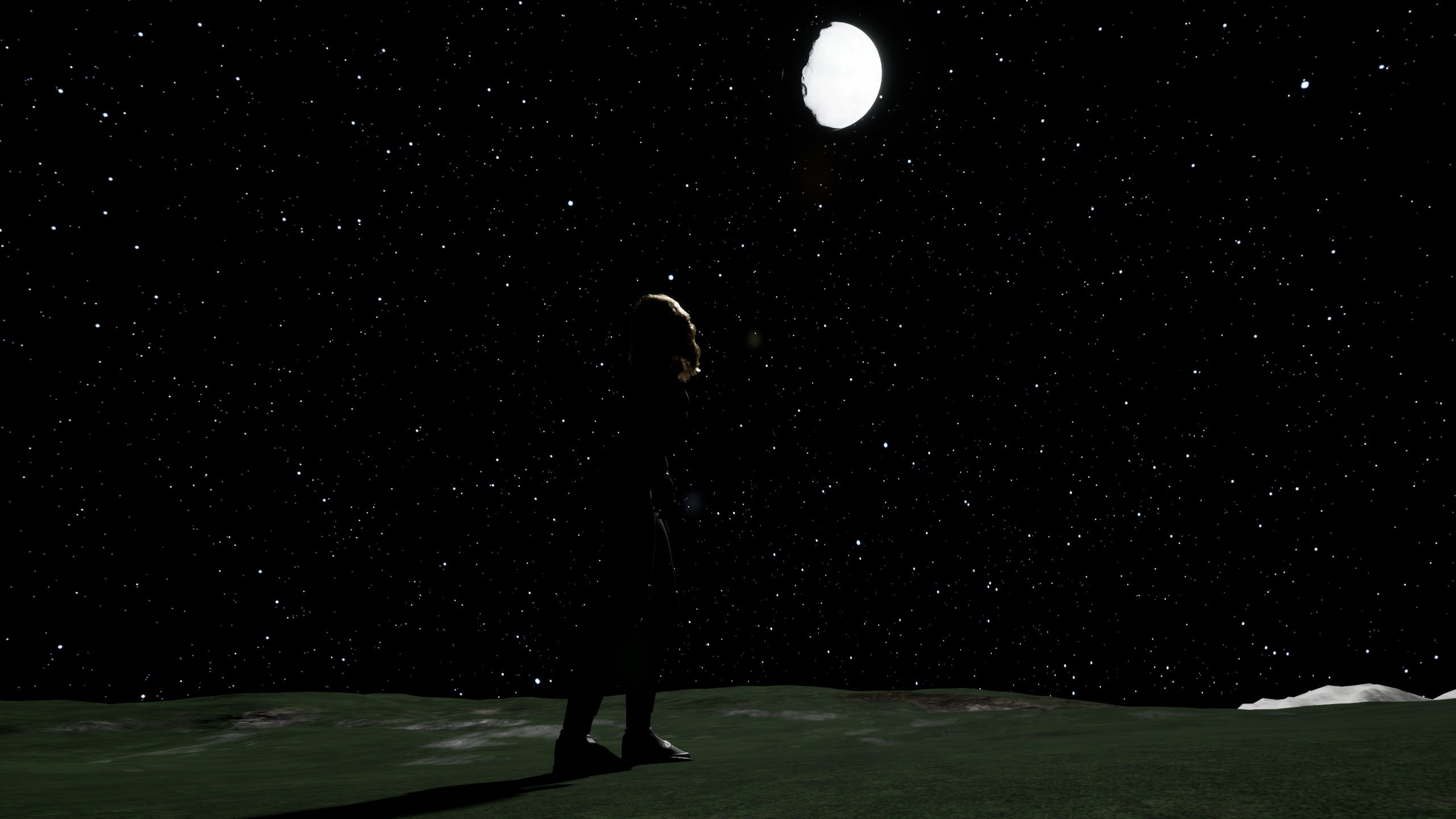
Aetheria needs to illuminate Selene, Selene needs to contribute visible light to Aetheria, receiver bodies must shadow themselves, and eclipses need curved boundaries while every client rebases its own world.
Measured anchors turned lighting into a contract: a 0.0015-lux starfield, roughly 0.0995 lux from Selene on Aetheria and 8.04 lux from Aetheria on Selene. Those targets exposed a moon blackout whose uniforms and ray mathematics were correct. The shader was reconstructing a fictional receiver point from projected SceneDepth; snapping it back onto the real sphere fixed the production result. The numbers were right. The pixel was in the wrong place.
Build evidence
These are captures from specific development states, not concept art dressed up as progress.
Repeatable captures and test artifacts
EvidenceRunner is an editor-only recipe runner for repeatable test cells: configure a state, wait for the correct condition, capture an artifact, hash it, and write enough provenance to reproduce what happened.
Its first dogfood recipe completed twenty steps in 11.64 seconds and produced thirteen artifacts. A screenshot step does not finish when Unreal accepts the request; it finishes when the file exists. A run is not a pile of loosely named PNGs; its manifest connects every artifact to a recipe, cell, state and hash. The bridge into the development vault stays outside the reusable plugin so the tool does not secretly depend on one project layout.
Current development state
The current record reaches from the first plugin and server architecture through planetary movement, celestial lighting, automated evidence and dedicated-server restoration. It also preserves unfinished investigations.
A first-connection SkyLight problem remained open at the end of the documented May arc. The latest experiment showed a causal relationship between SkyAtmosphere admission state and captured cubemap content, but not the root cause or a production fix. That distinction matters. The project now has a world, a technical spine and a growing body of evidence showing which parts actually work—without rewriting unresolved results into victories.