Source
Immutable imported material and the provenance needed to understand where it came from.

The tools I use to generate, check, repair and train model data without tying the whole project to one provider.
SkyeEngine started with the scripts I wrote while training GLaDOS. They worked, but too much depended on filenames, shell history and me remembering what I had run. That stopped being manageable once the corpus reached hundreds of thousands of conversations.
I moved the reusable machinery into SkyeEngine. GLaDOS still owns her identity, prompts, rubrics and training policy. Inference, data handling, judging, repair, rendering and training mechanics belong in the engine.
A record can contain ordinary text, hidden analysis, tool calls, tool results, schemas and several assistant turns. SkyeEngine gives those parts explicit identities, so a judge or repair job addresses the exact turn and channel it means instead of relying on an array offset which changes after the next transformation.
Structural validation catches duplicate calls, orphaned results, undefined tools, interrupted exchanges and records which stop before a trainable answer. Source selection and project policy remain with the owning project; the portable record and validation rules belong here.
Each step leaves an inspectable artifact for the next one. A familiar filename is never enough to prove that work is current.
Every important stage records inputs, outputs, configuration, code identity and parents. Fingerprints prevent a familiar filename from impersonating current evidence.
Immutable imported material and the provenance needed to understand where it came from.
A separate record of the exact defect, rubric and target turn which triggered intervention.
A localized proposal with its own lineage, never an in-place mutation of the source layer.
Post-repair evidence which can disagree without rewriting the history which produced it.
Neutral intent stays in the control plane. Each backend owns its translation into provider-specific requests and responses.
Run a request now when the result is small enough to remain attached to one process.
Persist attempts, state and partial failures so a process exit does not erase what actually happened.
Split slow work across a provider or accelerator backend without representing a half-fetched batch as complete.
Dataset preparation, canonical transformations and model-native rendering primitives.
Portable structural checks plus explicit attachment points for project-owned rules.
Backend-neutral execution, controlled rewrites, structured evaluation and lifecycle orchestration.

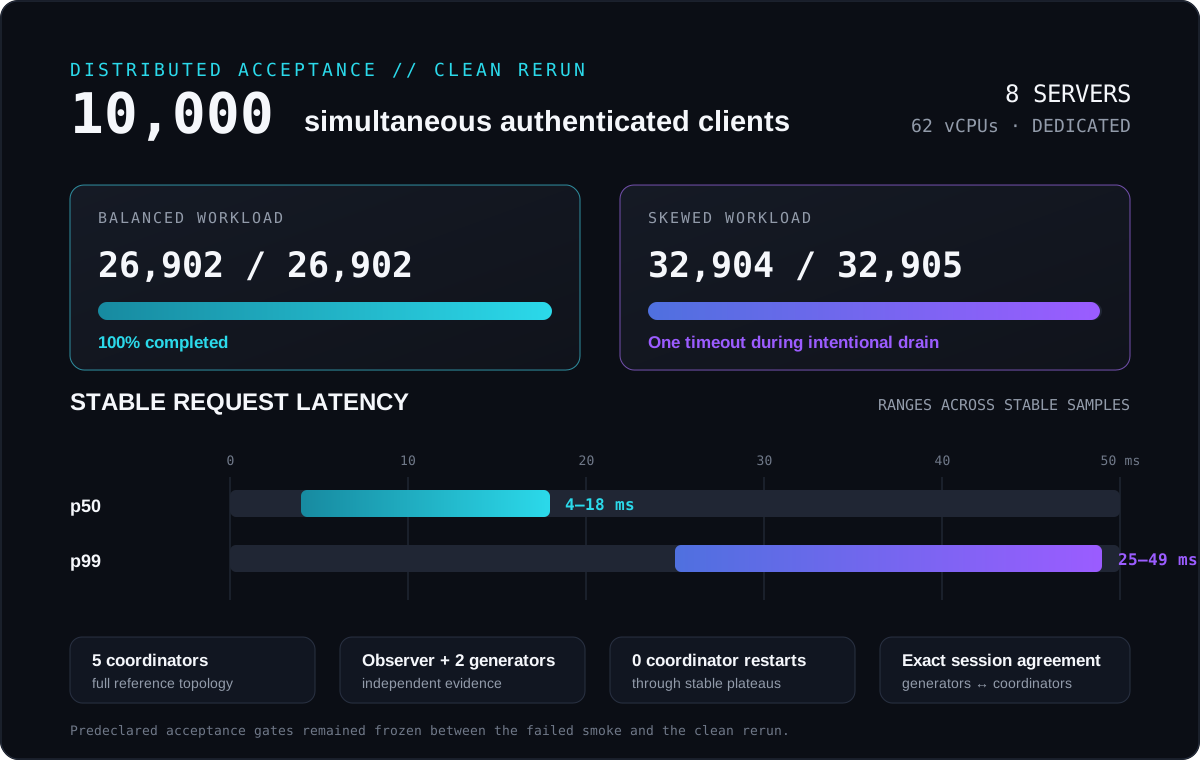
Fabric is the distributed execution plane for the point where a model-building workflow stops fitting on one machine. It connects GPU workers, storage, inference services and tools across machines and providers without making every service understand the physical network underneath.
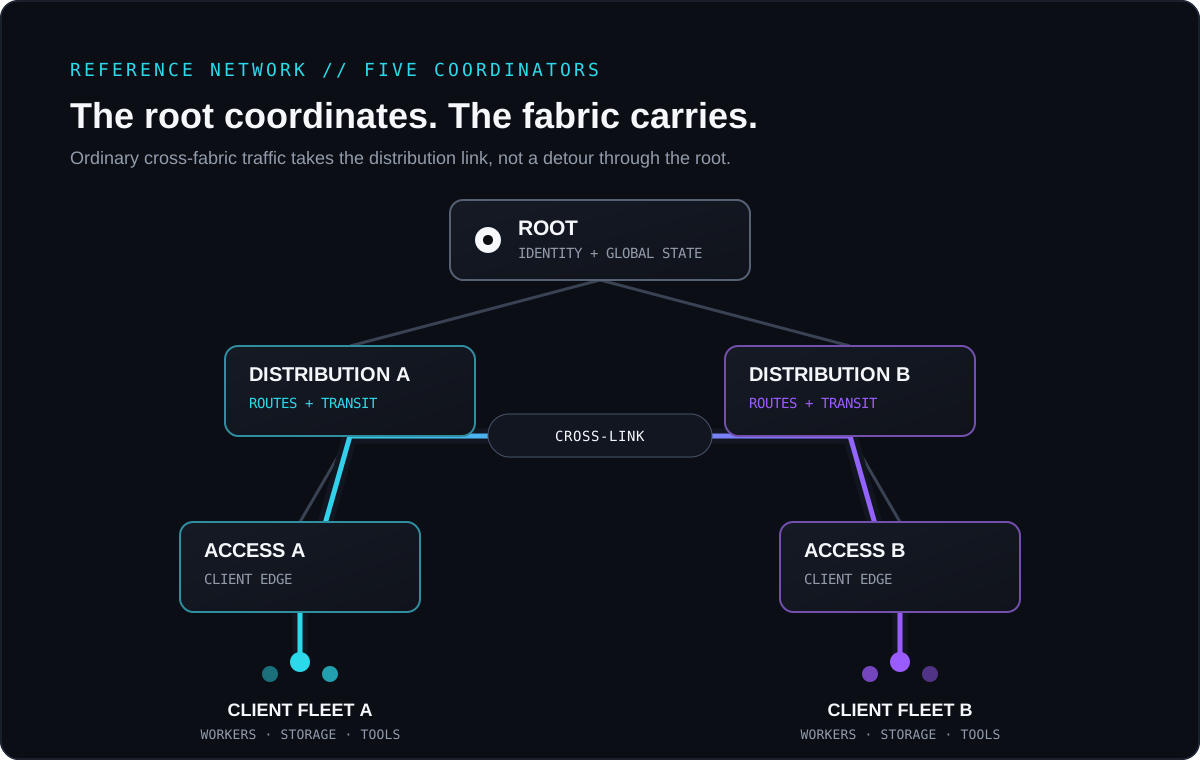
Coordinators provide one signed identity and discovery system, distribute routes and introduce clients. The root owns identity and global state without becoming the transit path for every byte. Distribution coordinators carry cross-fabric routes; access coordinators attach workers, storage and tools at the edges.
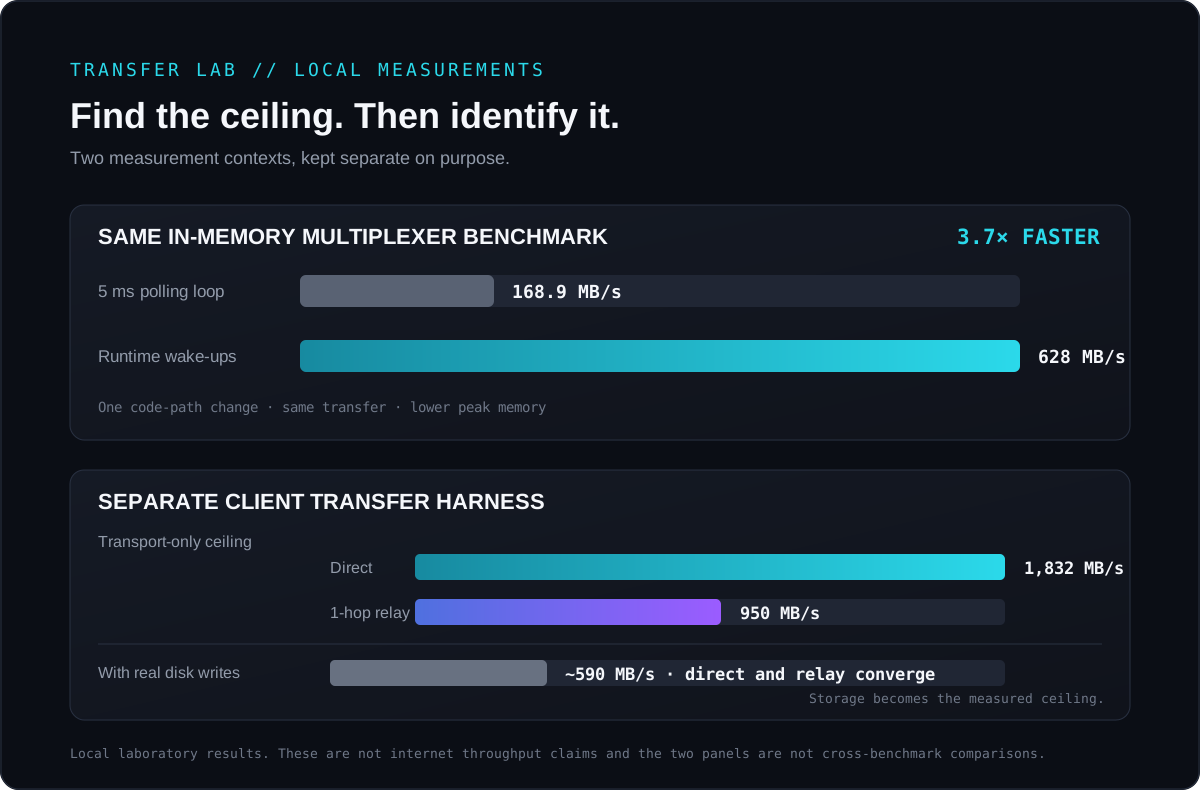
Transfers happen between clients. Fabric brokers a direct connection when the endpoints can reach each other and falls back to a cut-through relay when they cannot. Both ends report what they verified, so the system retains an audit trail without claiming to have inspected traffic which never crossed a coordinator.
Owns signed identity and the shared view of the Fabric without carrying ordinary cross-fabric traffic.
Connects regions of the Fabric and carries routes between access tiers through explicit cross-links.
Attaches inference workers, storage services and tools while keeping their physical placement behind the Fabric boundary.